A controller that reads 2°C is telling you about the air around its probe. It is not telling you the temperature of the ham at the front of a serve-over, or of a pallet that arrived an hour ago and is still by the door. The first week of November is a sensible time to agree where readings are taken, before December’s stock makes a sloppy log expensive.
EJM maintains cold rooms, cabinets and the packs that feed them. On a service visit the plant can be healthy and the product still warm, because the thermometer and the food are not in the same place. This note is about that gap. It is not a food-safety ruling. UK hygiene rules generally require many chilled foods that can support bacterial growth to be kept at 8°C or below, and the Food Standards Agency advises running fridges at 5°C or below. What you do when a reading is high sits in your own plan.
Air and product are different temperatures
Discharge air leaving an evaporator is the coldest air in the room. Return air, after it has passed the product, is warmer. Many controllers sense return air, because that is a fair way to run the plant. It is a poor way to decide whether a particular case of food is cold enough to sell.
Product lags the air. Open the door and the air temperature jumps within a minute. A pallet of meat barely moves. The opposite happens after a warm delivery: the room air is back at the set-point while the core of the new stock is still coming down. A single glance at the panel, taken in a quiet moment, misses both of those.
If you only ever record the panel, you have a record of the probe. You do not yet have a record of the food.
Look where the warm product actually sits
In an open cabinet the weak spot is usually the front row, where the air curtain is doing the most work, and anywhere a stack of stock has covered the return grille. A probe clipped to the evaporator will read beautifully while that front row drifts. Measure a pack you would actually sell, in the place a customer takes it from.
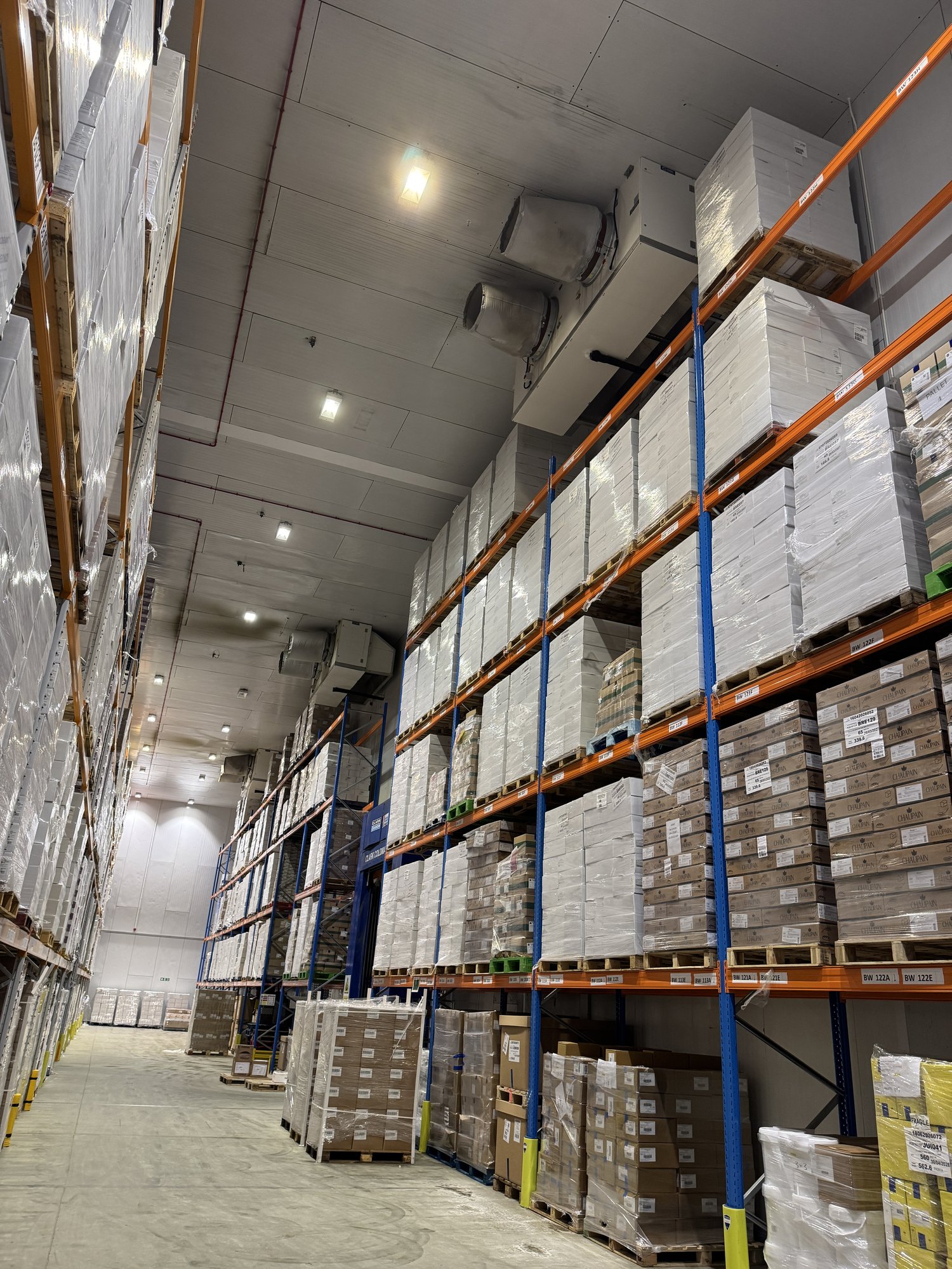
In a cold room the warm spots are familiar once you walk them. By the door. On the dock side of a marshalling bay. In a corner the fans do not reach. On the face of a pallet that was loaded hard against the coil, so the air cannot get behind it. The aisle directly under a running evaporator is often the coldest part of the room, which makes it the worst place to “prove” the store is fine.
Take the reading after the room has been working, not only at dawn when the doors have been shut all night. A Tuesday morning figure and a Friday afternoon figure are both useful. One of them, on its own, is a story with the busy part cut out.
Write the place down, and leave the probe where it is
A useful line in the log has four things: the time, whether you measured air or product, where you measured it, and who did it. The same place each day is what makes a drift mean something. A different shelf every morning is just a collection of numbers.
Controller history is worth having. It shows defrost, door openings and a plant that stopped at 2am. It does not replace a product check, and it should not be edited by moving the probe into a colder corner until the alarm goes quiet. If an alarm is a nuisance, the answer is to find out why, not to hide the sensor. Our note on the first hour after an alarm is what happens next. The measurement only helps if it was honest before the phone call.
Compare the panel with a thermometer you trust from time to time, in the same place. If product decisions or a customer audit hang on that probe, it needs a check. This article will not invent a calibration interval for you. If you do not know when it was last compared, that is the first question for the next visit.
Cabinets, cold rooms and cellars
A serve-over or a multi-deck needs a product reading in the warmest pack on show. The storage well underneath is a different temperature from the display deck. Write down which one you measured. Staff who “take the fridge temperature” by touching the deck are not taking a temperature.
A walk-in used for storage wants two habits: the panel air reading, and a product check near the door after a realistic spell of traffic. If the room is a production chill, say what was measured — a cooked product coming down, or a holding pack that has been there since yesterday. They will not match, and they should not be entered as if they were the same thing.
A cellar is the same idea with a different product. The thermostat on the wall is air. The beer in the cask is what you serve. If those two diverge, the cooler may be short of air across the evaporator, or a delivery may still be warm. The cabinet and cellar note covers how those units are loaded. This one is only about where the number comes from. Cold rooms used as stores are set out on the cold storage and distribution page.
When the two readings will not agree
If the product is warm and the air is cold, look at airflow, a recent delivery, and whether the room has only just finished a defrost. If the air is warm and the product is still cold, you are early in a problem and the product will follow. Do not average the two numbers and call it acceptable. Do not keep selling from a cabinet whose product you have not actually measured because the panel looks calm.
Blocked grilles, a probe that has fallen into the coil, and a door left ajar are ordinary causes. They show up when someone stands in the spot the food occupies, which a plant-room check will not do on its own.
Put the measurement on the visit
Tell us which reading you use for a decision, and where you think the warm product sits. EJM can look at probe position, alarms and the way the room is loaded as part of service and maintenance, or on a one-off survey. Cabinet plant is covered under commercial refrigeration.
Use the contact page, name the town, and say whether the worry is a cabinet, a cellar or a cold room. If you already have a log, bring a week of it. The pattern is more useful than a single photo of the controller.
To discuss a survey, a maintenance visit or a new installation, contact EJM Refrigeration on 01429 836 161 or email contact@ejmrefrigeration.co.uk.