Once the heating comes on, it is tempting to treat air conditioning as a summer problem. In a food factory that is a mistake. High-care rooms still need stable temperature and pressure. Changing rooms still need extract. Cold-store doorways still import moisture. Offices and control rooms still overheat when they are packed with screens and people in wet weather gear.
EJM’s air conditioning and ventilation work sits alongside industrial and commercial refrigeration, because the two systems share the same building, the same moisture and often the same complaints from production. This article is for factory and facilities managers who are looking at winter as a ventilation season, not a holiday from HVAC.
Winter does not switch air conditioning off
In production areas the load is not only solar gain. Motors, ovens, people, lighting and washdown all put heat and moisture into the space. In November the building fabric is colder, so that moisture is more likely to condense on walls, ceilings and cold-store entrances. Staff still need a tolerable working temperature. Hygiene still needs air that is moving in the right direction.
Office heat pumps with inverter control, which EJM installs as part of mixed commercial packages, often have to heat and cool on the same day in a North East autumn. A system left in last summer’s mode will either freeze occupants or fight the heating. A short seasonal commissioning check — set-points, reversing valves, filters, outdoor coils — is cheaper than a winter of complaints.
Server rooms and small control rooms are easy to forget. They do not follow the factory calendar. If the only cooling is a wall unit that has not been cleaned since May, November is when it usually trips, not July.
High-care areas, pressure and moisture
High-risk food production and high-care pressurisation systems exist to keep dirty air out, not to make the room feel like a hotel. In winter, that job gets harder. External doors are opened in wind and rain. People move between cold stores, packing halls and welfare in heavier clothing. Washdown continues. If the air handling plant cannot hold the intended pressure cascade, you will see it as condensation, as complaints about draughts, or as hygiene observations you would rather not receive.
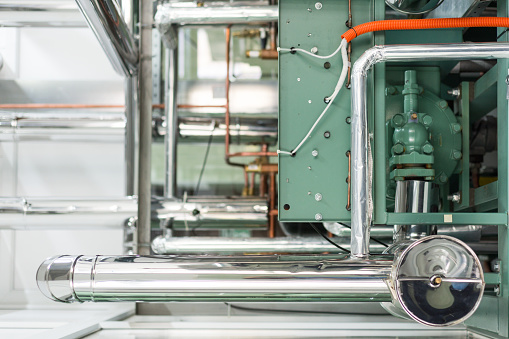
Balanced factory ventilation is the unglamorous partner of refrigeration. Extract without make-up air pulls cold, wet air through every gap, including into temperature-controlled rooms. Make-up air without extract leaves the building stuffy and the moisture sitting where you do not want it. Canopy extract over cookers and fryers still has to work in December. Textile sock and ductwork distribution still has to deliver air without blowing product or people off their feet.
Close-control systems, where they are specified, are there because the process is intolerant of drift. Do not treat them as ordinary comfort cooling just because the weather has turned.
Dehumidification and ice as a winter problem
Ice at a cold-store doorway is a winter classic on food sites from Durham to the Humber. It is also a slip hazard. EJM has applied desiccant dehumidification on projects specifically to cut moisture at source so that frost on cooler coils and ice on floors is reduced. That is not a claim that every doorway needs a dehumidifier, and it is not a guarantee that ice will disappear. It is a design option that belongs in the winter conversation, because defrosting coolers uses energy and puts heat back into the store.
If moisture is entering because doors stand open, no dehumidifier will keep up forever. Engineering and operations have to meet: fast doors, working seals, sensible marshalling, and air handling that does not dump wet air at the threshold.
Ambient coolers in packing halls face a related problem. They are asked to hold a mild chill while doors to frozen rooms open beside them. In winter the “mild” hall can still be wet. Coil selection, defrost and drainage need to match that duty, not a brochure condition.
Changing rooms, canopies and factory balance
Welfare ventilation is often the first system to be turned down to save energy. Damp changing rooms then become a staff issue and a hygiene issue. Extract in changing rooms, toilets and canteens should be confirmed before the heating season, not after mould appears on a wall.
Canopy extract and associated make-up should be checked for grease, belt condition and control interlocks with gas or electric cooking. A canopy that worked in a quiet summer shift may struggle when festive production adds a second sitting in the works canteen or a longer cook cycle on the line.
Walk the building with the production manager, not only the maintenance fitter. Ask where people feel cold, where they see drip, and where doors are wedged. Those answers tell you more about winter air handling than a set of nameplates.
Close control, clean rooms and offices
Not every EJM air-conditioning project is a food hall. Clean rooms, humidity-controlled spaces and close-control rooms appear in laboratories, composites and other non-food work as well as in high-care food. Winter is when humidity control is most likely to surprise you, because cold incoming air is dry in one sense and wet in another — cold surfaces still sweat if moist indoor air meets them.
Filters, coils and humidifiers (where fitted) should be inspected before the heating season beds in. A blocked filter on a close-control unit is a process risk, not a comfort niggle.
If you are already planning refrigeration works, bring ventilation into the same survey. A new cold room with no thought for the hall outside it will simply move the condensation problem one door along. Our engineers are used to looking at refrigeration and air handling as one building, which is why the two services sit next to each other on this site.
Plan winter air handling with EJM
A useful next step is a site walk, not a catalogue. Tell us whether the issue is a high-care room, a doorway that ices, an office heat pump, or a clean room that will not hold humidity. EJM can survey from the Durham office or from Derby, Kent or Glasgow depending on where the factory sits.
Request a visit through the contact page, or ask for air conditioning and ventilation to be included in an existing refrigeration maintenance call so the engineer is not looking at only half of the problem.
To discuss a survey, a maintenance visit or a new installation, contact EJM Refrigeration on 01429 836 161 or email contact@ejmrefrigeration.co.uk.